Thursday, August 16, 2012

Skillet Ratatouille, by Shawnie Kelley Foy & Mandy Jones


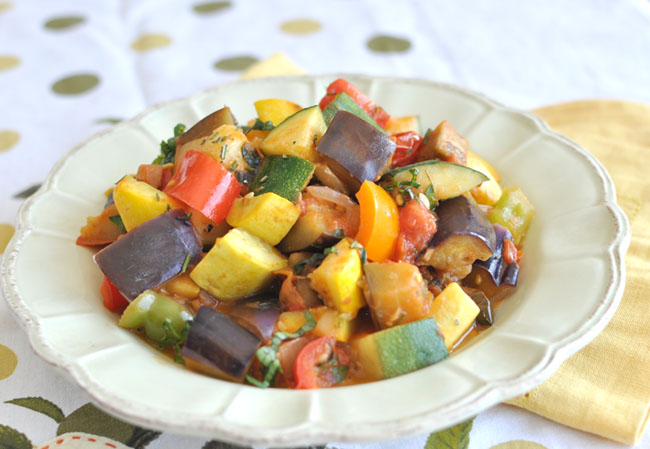
What to do with the abundance of produce from the local farmer's market? Make ratatouille, of course. The traditional, Provencal French vegetable stew is easy, forgiving, and versatile. This big batch recipe was developed by me and my sister, Mandy Jones with whom I taught our Simply French cooking course at Upper Arlington's Lifelong Learning. We included this dish in our "Provence on a Plate" class but decided to veer away from the usual Dutch oven or casserole version (REALLY, who wants to fire up their oven during the dogs days of summer??). Instead, we created a lovely stove-top skillet version of the recipe, which despite using a million different pans, keeps each of the vegetables vibrant and maintaining their individual flavors. 

We have been eating locally sourced products for years, so ratatouille is in high dinner rotation come late summer. In honor of the "Eat Local" challenge during Local Foods Week, Mandy and I resurrected our recipe, grabbed our market bags, and set out to acquire beautiful veggies from our respective markets...


Recipe: Ratatouille
Time: Prep: 25 minutes/ Cook time:  1 hour
Yield:  12 servings


Ingredients:
6 tablespoons extra-virgin olive-oil
5 medium yellow onions, coarsely chopped
Bouquet garni- bunch of herbs tied together for seasoning
3 large red (or yellow) bell peppers- cored, seeded & cubed
2-3 small eggplant (about 1 lb)-cubed, not peeled - sprinkle with salt 30 minutes prior to "sweat"
2-3 medium zucchini (about 1 lb)-cubed, not peeled
5 medium tomatoes- cored 7 cut
OR - 1 28 oz. can- diced, herb tomatoes

OR - 2-3 large tomatoes- concasse (blanched, peeled, seeded & diced)
1 lemon- halved
Fresh parsley- finely chopped for garnishing (or a few leaves of basil)

Directions:
In large non-reactive skillet, heat 2 tablespoons of oil over medium-low heat, add onion and bouquet garni. Stir to coat with oil. Cook covered, stirring occasionally until onions are tender and light golden (about 20 minutes). Do not burn.


Add red bell peppers to the onions; stir occasionally until very soft (about 30 more minutes).

In another non-reactive skillet, heat 2 tablespoons of oil over medium-low heat. Add eggplant. Cook covered until soft (about 20 minutes). Stirring occasionally to prevent eggplant from sticking to the pan.

In another non-reactive skillet, heat 2 tablespoons of oil over medium-low heat. Add zucchini. Cook covered until soft (about 20 minutes). Stirring occasionally to prevent sticking to the pan.

While eggplant and zucchini cook, add tomatoes to onion and pepper mixture. 

Cook over low heat for 15 minutes.

Spoon all of the vegetables together into large bowl. Place pan of combined excess liquid over high heat and reduce until thick. Pour thickened liquid over vegetables and stir gently to blend. Season with salt to taste.  Squeeze lemon wedge over the top and garnish with minced parsley (or herb of choice)


Serve with a crusty baguette from your favorite local baker.

Variations:  Replace 1 eggplant with 1 winter squash, add garlic & include tarragon;
Leftovers can be served over pasta; rolled into a crepe; used as a side dish or as topper on a tart.

Wine Pairing: Lighter style red (won’t muddle flavors); Pinot Noir; Rioja; Chianti; nothing with oak


Fête en Blanc: A Picnic With A Purpose, by Shawnie Kelley Foy


 " Fête in full force" Photo: Dustin Grovemiller

The fine Fête -goers of Columbus created quite a spectacle last weekend when nearly 400 people bedecked in blanc converged on Goodale Park for the second annual Fête en Blanc-- or "white picnic." Last summer, after reading a New York Times article, three foodie fun-loving gals (myself included) decided to organize a Parisian-inspired pop-up picnic but with a major twist: the picnic location is disclosed just a few hours before the event, which is BYOEverything... and we mean everything: tables, chairs, linens, food, beverages, lighting, and centerpieces. In the fall of 2011, our first annual Fête went off without a hitch (assuming you don't count the torrential downpours that left us to party under a tent instead of the stars). 

Once again, we hoped for a Fête under the stars and this year were obliged. The fickle clouds and rain throughout the day was a bit of a nail biter, but Mother Nature wanted us to Fête--- proof is in the extraordinary picture snapped by Norm Hall (a two year Fête veteran!)  

Mother Nature wanted us to  Fête! Photo: Norm Hall

Despite last year's soggy grass and chilly air, we were confident Fête en Blanc would be embraced again this year, but were pleasantly surprised when it doubled in size! Hundreds of white-clad friends impressively rolled in to the designated entrance carting their grand picnic feasts, which included nearly everything but the kitchen sink--- come to think of it, there might even have been a sink. 


Photo: Mandy Jones

Fête en Blanc is a non-profit event with non-profit status. We never set out to make money, but after realizing there would be a little money left over beyond our operating costs (which are more than one might expect), we decided to add a charitable component. The choice of a local food organization seemed a no brainer as the three organizers, as well as the Fête goers, share a similar passion for food, friendship, and Columbus. 

We opted to give a portion of proceeds to Local Matters, an organization dedicated to improving our local food system, ensuring everyone has access to healthy, wholesome food. We consciously selected the Friday, August 10 date to coincide with the start of Local Foods Week the following day. The same evening, Peletonia (a cancer fundraising bike ride) held its opening ceremony at The Commons, which made a doubly good reason to beg Mother Nature to relent with the rain. She smiled on all of us. It's wonderful living in a city that has so many good things going on. 

Sponsor Board
In keeping with our philosophy to maintain Fête's local flair, we invited a few food vendors to come on board by financially sponsoring Fête en Blanc and creating picnic packages that could be pre-purchased and picked up at the venue. This worked out brilliantly for a lot of folks who, like us organizers, might not have time to create their own feast. The Hills Market in Powell/Worthington (and now with a downtown location), Huffman's Market in Upper Arlington, and Pistacia Vera in German Village rose to the challenge. 
Huffman's Fete Basket 
Photo: Mandy Jones
Hills and Huffman's each created different types of French-inspired menus, but using locally-sourced products. Hills offered a Pan Bagnet using Ohio pulled chicken, pasta from Marietta, local-grown veggies, and offered several types of Ohio cheese on their a la carte menu. Huffman's put together a charming picnic basket with your choice of beef, chicken, of veggie entrees and a full compliment of salads, veggies, breads, and fruit. The peach basket presentation was lovely. Pistacia Vera likewise was kind enough to bundle up a special package of macarons in various shades of blanc and offer Fête-goers a discount on any of their desserts délicieux. Deep appreciation to each of them for creating such thoughtful menus and fabulous food. And we owe ongoing thanks to Oakland Nursery for their behind-the-scenes support and helping hands in set up. 
Photo: Marcia Colucci
Those folks who brought their own food, did so with such passion and flair last year, we decided to reward the unbridled creativity with a prize for this year's most splendid table. The winner of "La Table Magnifique" received a bottle of Veuve Cliquot Champagne, but they won only by a hair. There were easily four or five tables in contention, which made for a difficult decision. As the evening progressed, everyone feasted and danced under the night sky while another local delicacy, The Randys, crooned their happy cha, cha tunes from the gazebo. At 10 PM sharp, Fête en Blanc called it a night. Everyone cleaned up their space (immaculately, we must add) and disappeared into the evening... 
Photo: Marcia Colucci
We, the organizers, are thrilled with the support and enthusiasm with which Columbus, our sponsors, volunteers, and the band embraced Fête en Blanc -- but even moreso with the ability to make a sizable contribution to an organization such as Local Matters. Thanks to Local Matters for their hard work. And thanks to all of the Fête-goers who made the event what it was.... tres magnifique!!

We look forward to seeing what Fête 2013 has in store and hope to see even more of you there.

Fête en Blanc Board (L to R):
Genevieve Reiner; Shawnie Kelley Foy; Mandy Jones
Photo: Marcia Colucci
Check out Fête en Blanc's website for stories and pictures of current and Fêtes past. 
Follow Fête on Facebook and Twitter @FeteBlancCbus. 


Monday, August 13, 2012

Galettes for Two

While growing up, crepes in our household were the staple breakfast food, much more than even pancakes or waffles, so crepes hold a lot of nostalgia for me. I have been on a crepe-making odyssey for years, experimenting successfully (and failing miserably at times) with a variety of flours, fillings, and techniques... some work, some don't. But, I regularly return to the basics. Straight-up buckwheat crepes.

In France, a buckwheat crepe is called a galette and is most popular in the western & southwestern parts of the country. I teach a cooking course at Upper Arlington's Lifelong Learning with my sister, Mandy Jones, called Simply French. Our class, the Great Crepe Escape features a handful of sweet and savory recipes. This class never gets old because of the endless variations, but the ham, cheese, and egg stuffed galette is among the most popular--- second only to the 10-layer apple crepe cake with hand-whipped cream.

When invited to participate in a Crepe Challenge through the Association of Food Bloggers, in conjunction with Pete and Gerry's Organic Eggs, I decided to start with a fundamental recipe. This is not my official content entry, but find it a fun way to integrate the crepe challenge into Local Foods Week here in Columbus. I picked up many of the ingredients from my friendly neighborhood family-owned market, Huffman's Market and most of the products used are organic, except the beer. 

BEER? You ask? 

A little trick I learned while living in France is to add a touch of lager to the batter, as the yeast helps the crepe to rise just a bit -- and lends flavor. This is the traditional Briton way of doing things. And the Britons DO claim to be the originators of the galette... after a few lessons from a Briton friend and fast-forward ten years, I have come up with my own tried and true recipe for buckwheat crepes. 


INGREDIENTS:
1/3 cup buckwheat flour
2/3 cup white, all-purpose flour
1/2 cup of milk (or a mix of half-n-half and water)
1 egg- Pete and Gerry's Marans heirloom brown egg used here
1 tablespoon of soft butter
1/4 cup beer- lager or lighter brew
1/2 teaspoon of sugar
pinch of sea salt
1 tablespoon oil, for cooking


Whisk together the flours, then slowly stir in the milk, egg, butter, and beer. Once the dry and wet ingredients are combined, add the sugar and sea salt, then mix into a smooth batter.

The batter should be thicker than your traditional crepe or pancake batter, and you will manually spread it around in the crepe pan.

Ideally, you should let buckwheat crepe batter rest and chill overnight. Bring the batter to room temperature an hour or so before using it.


Over the years, I have acquired an array of official and unofficial crepe pans, although I have yet to get my hands on an electric crepe maker (is this enough of a hint for a birthday or Christmas gift ?). The authentic stainless steel crepe pan is my favorite as it makes the edges and parts of the crepe crisp up. The non-stick pan works well, but it takes a minute or two longer to make each crepe, yet it still cooks consistently. The large pancake griddle is the pan of choice for my buckwheat gallettes as I like to make them larger than the standard 8 or 9 inch crepe, so the swirling paddle helps spread the batter quickly and evenly. They all end up tasting pretty much the same, so I guess I would recommend using whatever pan works for you.


This morning's choice of filling: low-sodium ham with Muenster cheese for the husband and brie for me. I prep the ingredients while the batter is coming to room temperature.

The next pictures show the two different pans in action. The larger griddle allows for larger crepes. Just sweep the batter around in one continuous motion, keeping the paddle centered over the batter. These paddles can be purchased at Sur la Table and other kitchen stores for a few dollars.

Heat up the steel crepe pan (or griddle) on the medium heat. Add oil to the pan and, once warmed, roll the oil around to coat the pan. I can measure by eye these days, but you can pour about 3/4 cup of batter onto the griddle to make one large crepe.


The stainless steel pan is only 8 inches, so I use a different type of wood crepe paddle to spread about a half cup of batter by hand. As you can see, the crepe crisps up a little bit more in steel versus the non-stick surface of the griddle.


I keep the crepes warm in the warming drawer (or in the oven on low); then assembly-line the filling and roll them. Most of the time, I pop them back on the pan just to melt the cheese a bit...

And voila... the variations are endless. 

Filling Suggestions: Smoked salmon with lemon and dill creme fresh; goat cheese and roasted red peppers; spicy sausage and manchego cheese; Use up your fabulous leftover farmer's market ratatouille to create a "Wrap-tatouille"


Monday, July 23, 2012

Roasted Red Pepper, Goat Cheese, and Mushroom Pasta


Nothing like a 100 degree day to fill your belly with a heap of comfort food. This pasta dish was inspired by two different recipes discovered on Pinterest then combined and tweaked. (Ignore the squash.... that was going to be a side, but we opted for salad). This cheese sauce is very rich, and easy to make. You can use whatever pasta you want (we chose linguinette) and add the veggies or meat that makes you happy. I was content to go meatless tonight, as we had a pile of mushrooms, cheese, and garlic pulled straight from our yard last week. Tacked on a crispy side salad, topped with croutons made from last weekend's purchase of rustic Italian Bread from Enrico's Biscotti in Pittsburgh-- and bon apetit. This is going into high rotation for dinner.


Roasted Red Pepper, Mushroom & Goat Cheese Pasta
Yield: 2 large servings


Ingredients

2 Whole Red Bell Peppers- if you plan to roast your own red bell peppers
SHORTCUT: Use a 1/2 cup of jarred, roasted red peppers (or grab some from the closest grocery salad bar), coursely chopped, which is what I did tonight.
2 tablespoons olive oil
1 small shallot, diced
2 cloves garlic, minced
1 cup (fat free) half & half- brought to room temperature
4 oz. goat cheese (plain or herbed is good too)
2/3 cup grated parigiano reggiano cheese
1/2 cup sliced mushrooms-- or artichoke hearts (optional)
1/2 lb. linguine, cooked to al dente
sprinkle of red pepper flakes or ground red pepper for kick
salt & pepper, to taste
Directions:
If roasting your red peppers: Preheat oven to 500 degrees. Place red peppers on baking sheet and bake 20-30 minutes until peppers are charred. Remove from oven and cover with foil 10 minutes. Uncover peppers, peel off skin and remove stem and seeds. Chop into large pieces. 

In a sauce pan, saute shallots in olive oil over medium heat for 3 minutes then add garlic, sauteing over for another 3 minutes. 
Stir in half & half, add goat cheese in bits. Stir until melted, add salt to taste, and keep warm over low heat.


In a separate frying pan, cook the mushrooms (or whatever additional veggies and meat you plan to include) in olive oil-- Mushrooms cook for about 5 minutes. 


Next, add the roasted red peppers (or take the shortcut and go for the jarred peppers. Mine contained caramelized onion, which lent a bit of sweetness to the to the sauce.)


Stir in Parmesan and salt to taste. When melted, puree sauce in a food processor, or with an immersion blender. 


Once fully blended, toss with cooked pasta and mushrooms. I used linguinette-- a skinnier version of linguine. 
Taste and adjust seasonings. Top with more Parmesan cheese (or not), pepper, and parsley (also from my garden)...


Friday, July 20, 2012

Happy Hens = Delicious Eggs


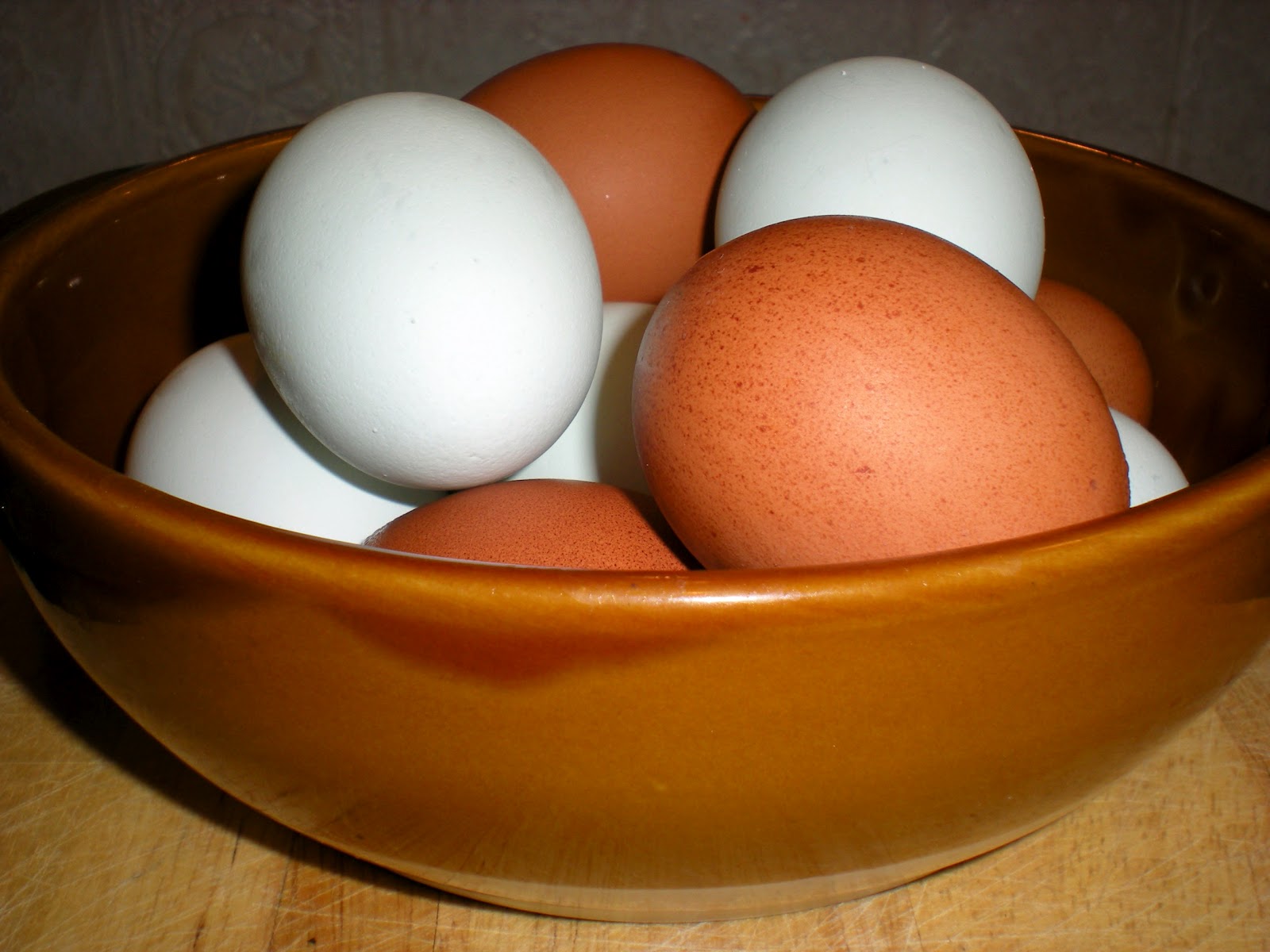
Having been chosen to participate in a crepe recipe challenge, we were given a month supply of AH.MA.ZING heirloom eggs from  Pete and Gerry's's organic egg farm in New Hampshire. When the gorgeous Marans and Ameraucana hen eggs showed up on my doorstep, I felt the need to actually taste them individually to see what the yolks look like and to determine if there is a flavor difference... 


Marans hens hail from the central-western coast of France near La Rochelle in the Poitou region and the pure breeds aren't the easiest to come by here in the States. Interestingly, during my travels around France, I have ventured very close to Marans, but wasn't aware the region is well-known for it's medium-sized, hearty chickens, popular for their show-bird qualities, chocolate brown eggs (reportedly the darkest in the world), and delicious meat.


Ameraucana hens originate in America, but are related to the South American Araucana (easter eggers). The breed is recognized as having eight different color birds and the hens lay a lovely shade of pale tinted green-blue eggs. They are a large breed chicken and therefore lay larger eggs. (Note: slight size difference in my pictures).


Pete and Gerry's organic farm birds are raised from one-day old chicks in cage free pullet barns. Adults are moved to cage-free barns, allowed to scratch around outdoors, and have fine egg-laying facilities (replete with curtains to cover the windows. Mama hen needs her privacy.). They roam and roost freely, while feeding on natural grains and pasturing on the grass. The farm is certified Humane by the Humane Farm Animal Care Program,who maintain rigorous standards and conduct annual inspections to ensure the welfare and humane treatment of the animals.


I decided to sacrifice one egg from each batch in order to see and taste any differences. The brown egg (on the right) had a darker yolk and slightly darker white, while the yolk from the green egg (left) was larger and lighter. Both eggs stayed firm and held their shape while frying, and the yolks were hearty. I fried them in light olive oil, then taste tested the yolks (which were bright and flavorful). The visual differences were obvious even when cooked, but my taste buds couldn't discriminate a difference in flavor. I can, however, say they taste definitively better than most commercial eggs out there (don't get me started on that!)-- which is, of course, due to the organic diet Pete and Gerry's chickens are fed, combined with their healthy living conditions. 


Happy hens = delicious eggs. 
And proof was in the pudding-- or should I say, on a lovely bit of baguette. 
This made for an eggcellent prelude to the impending crepe competition


Wednesday, July 18, 2012

A Most Egg-cellent Opportunity


I was selected by the Association of Food Bloggers for a crepe competition. We are provided a month worth of eggs by New Hampshire-based Pete and Gerry's organic egg farm and have to come up with an original crepe recipe by August 31. 


Today, a dozen of the most beautiful eggs showed up on my doorstep... six chocolatey brown Marans hen eggs and six pale, mint green Ameraucana eggs. The photo (taken with my phone) doesn't do justice to the pastel color of the eggs. These are fresh, organic, cage-free, Omega-3 eggs from hens that are Certified Humane.


I guess it's time to get cracking!


Sunday, July 15, 2012

A Snapshot of Pittsburgh's Culinary Scene

I, along with five other members of media and tourism, was invited by the ever-gracious Kristin Mitchell of Visit Pittsburgh to attend a three day culinary and cultural tour of the city. Despite having family around the area, it's been more than 15 years since I have spent any time at all in Pittsburgh-proper. My partner in culinary curiosity, Genevieve Reiner, (I refrain from using the word crime, since she is a lawyer by day) was also invited to cover the food scene for her blog, Ham Sandwich Indicted. We took a "divide and conquer" approach. She is focusing on food and I on the cultural aspects. With that said, I still feel the need to share some of the foodie highlights from this media tour.  

Unfortunately, we did not eat at Conflict Kitchen at 124 S. Highland in East Liberty (a developing neighborhood just outside of downtown). It is open for lunch from 11:30-2:30-- and we rolled by at 10 AM. The current incarnation features a Cuban kitchen but has, in the past, served Iranian, Afghan, and Venezuelan cuisine. Their website explains it best: "Conflict Kitchen is a take-out restaurant that only serves cuisine from countries with which the United States is in conflict. The food is served out of a take-out style storefront that rotates identities every six months to highlight another country. Each iteration of the project is augmented by events, performances, and discussions that seek to expand the engagement the public has with the culture, politics, and issues at stake within the focus country." 

COOLEST CULINARY CONCEPT: Conflict Kitchen, East Liberty
Changing food window serving cuisine from countries with whom the US has conflict or embargoes.

COOLEST CULINARY CONCEPT: Conflict Kitchen, East Liberty
Changing food window serving cuisine from countries with whom the US has conflict or embargoes.

We spent most of the first day eating our way around the Strip District-- a one mile "strip of land" running east along the Allegheny River, encompassing a good ten blocks along Penn Avenue and Smallman Street. Historically speaking, the riverfront location made this prime property for early industrial development and it also is the site of our country's first steel mills. With the railroads came wholesale produce merchants, as products could be unloaded directly from the train into the warehouses. Today, the Strip remains a hub of wholesalers, markets, ethnic eateries, and independent restaurants. In my opinion, it is one the Pittsburgh's most interesting and eclectic neighborhoods. You will find a nice overview of the Strip's history and a self-guided walking tour on Neighbors In the Strip's website.

We took a walking tour of the neighborhood with a local foodie tour company, 'Burgh Bits and Bites. Corinne, our guide explained there are so many interesting places in the Strip, the guides usually have to pick and choose based on the time and day... but Wholey's Seafood Market is always in the mix (pronounced "wooly"). The city's premiere purveyor of seafood has been around since 1912... basically, if it's fish and you can't find it here, you can't find it anywhere. 

Wholey's Fish Market, Strip District
This place is a sensory overload: sights, sounds, smells (yes, some are a little fishy). Not only does the market offer fresh and frozen fish, live lobsters, and you-pick tilapia tanks, it carries the gamut of meat, fresh produce, pasta, and plenty of local products. The sushi doesn't get any fresher and the lobster rolls are loaded with meat and the perfect (minimal) amount of mayo. Locals claim the fish sandwich here is the best in town, but we didn't have one--- I guess that's one good reason to come back. Also, we learned Wholey is opening a sit-down restaurant a few blocks away... reason number two to return. In fact, I think I spied "R.L.W." at the restaurant site as we were passing by... his lovely monogrammed RLW shirt cuffs caught my eye.
Wholey's Fish Market, Strip District

Lobstah! Wholey's Fish Market, Strip District

Fish out your own tilapia- Wholey's Fish Market, Strip District

As a side note: I've heard Pittsburgh's oldest seafood shop Benkovitz Seafood Market, just a few blocks away, gives Wholey's a run for their money in the fish sandwich department. We did not make it to the store during our tour, but I'm going back another time for a throw-down.  


Street side produce stall, Strip District

Mancini's Bakery was started in 1926 as the McKees Rocks Bread Company. It is the "twist" bread that put Mancini's on the map, but the pepperoni rolls have quite the following in their Strip District shop. One of the most staggering facts about this company, is they operate 24 hours a day making 10,000 loaves of bread daily. This is to supply many of the local markets that carry their products, but also to stock their two other stores in McKees Rocks and Market Square in downtown Pittsburgh. The samples we were offered were fantastic. The gooey cheesy pepperoni roll was my favorite, with the multi-grain coming in a very close second.
Mancini's Italian Bread Co., Strip District

Mancini's Italian Bread Co.
Parma Sausage is the most unassuming of all storefronts in the Strip. Blink and you might miss the sign and entrance. Don't let the small storefront space fool you. This almost-fifth generation family-operated business has been around since 1954 and has approximately 3,000 hams drying in the aging room at any given time. Everything is hand made onsite, while all of their prosciutto is made using Berkshire pork primarily from Iowa farms. We sampled a most beautiful Lonzetta Cotta, a rosemary-seasoned, slow cooked ham along with a spicy, hot sopressata salami. Good thing we had a cooler in tow... we returned home with a haul of porcine products.
Parma Sausage, Strip District

Parma sausage case, Strip District
And then there's the Pennsylvania Macaroni Company established in 1902, making this the oldest operating shop in the Strip. You can find anything your Italian heart desires here, including 450+ types of world cheese-- and sometimes close to 500 when you count seasonal flavors.
Pa. Macaroni Co. Cheese Shop, Strip District  c. 1902
We wandered around gawking at the shelves of pasta, sauces, olive oils, spices, and Italian desserts, but there's nothing like a wall full of cheese to make a girl stop and catch her breath. (And I thought I wanted to kid-nap the cheese monger from La Laiterie in Providence, RI!!)

More than 450 Cheeses at the Pa. Macaroni Co., Strip District  

More than 450 Cheeses at the Pa. Macaroni Co., Strip District
Penn Mac's Carol Pascuzzi makes you feel right at home when she calls you "dear heart" and hands over a generous sample of whatever deliciousness she happens to be slicing... let's just say, she knows her cheese. We sampled a super milky, Greek graviere cheese followed by an unusual, firm cow milk cheese with an espresso-lavender rind-- appropriately named "Barely Buzzed." 
Pa. Macaroni Co. Cheese Shop, Strip District 

Espresso/lavender Cheese! Pa. Macaroni Co. Cheese Shop, Strip District

We did not have time to go into DeLuca's, but I have eaten here before. I agree with the sign this is the Best Breakfast in Town... not so much for the food, but definitely for the hustle and bustle of the atmosphere. It's a greasy spoon for sure, so don't expect healthy options-- unless you count dry, wheat toast. The more popular menu items are the breakfast burrito, blintzes, and hotcake sundaes (Yes, the pancakes come piled with ice cream and whipped cream). It's not unusual to see a line forming down the sidewalk on weekend mornings, but it is worth the wait. Sit in a booth, sit at the counter--- either way, you will have to be rolled out of here where you are finished.
De Luca's famous diner, Strip District

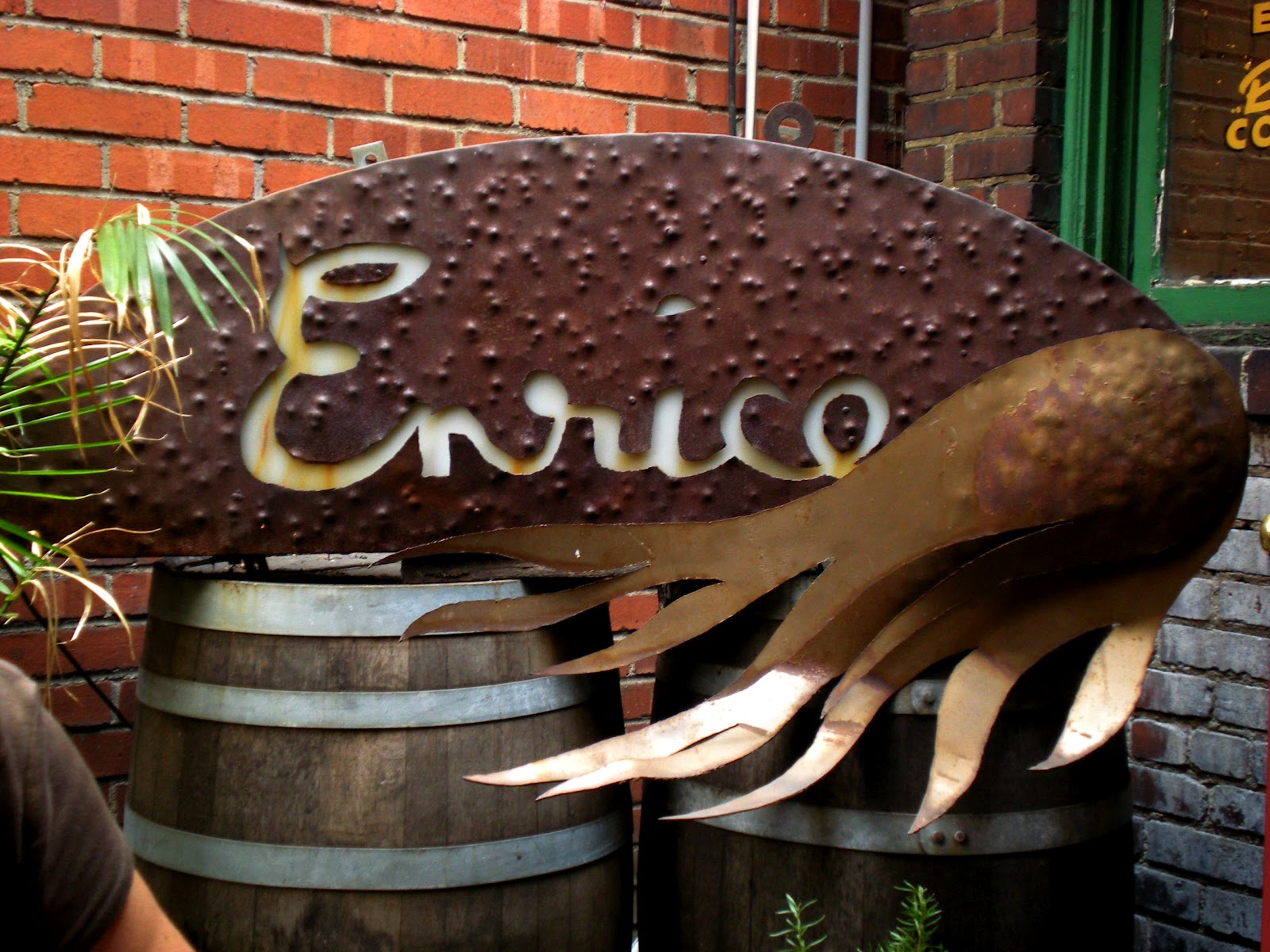
Enrico Biscotti is a small (and I mean teeny-tiny) store front shop that is piled to the ceiling with their famous biscotti and the pantry shelves stocked with loaves of bread. I imagine they hear this from time to time: "I am not a huge fan of biscotti, but these are exceptional!" which are my sentiments exactly. This is my vision of what biscotti should be.
Enrico's, Strip District
Enrico's Biscotti Shop, Strip District
These Italian cookies are huge, somewhat soft (albeit a bit crumbly, as they should be), and very, very, very good tasting. I had an apricot hazelnut biscotti, while Genevieve ordered the ginger. We shared, of course, and each were wonderful... but the biscotti got upstaged when we moved to the outdoor cafe portion of the bakery for a wine and macaroon tasting.  
Enrico's Biscotti Shop, Strip District

Enrico's Biscotti Shop, Strip District
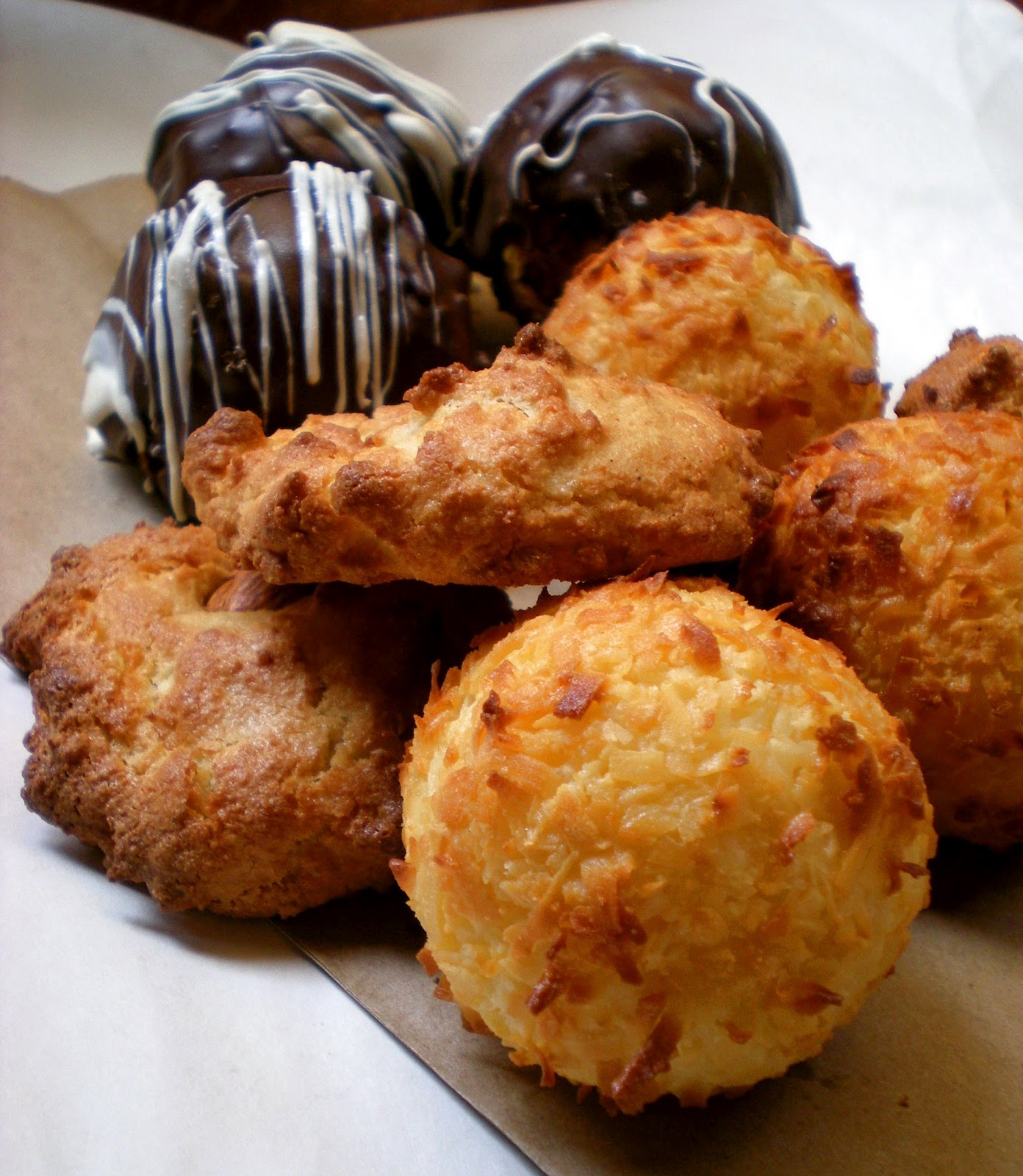
After having been on a macaron pilgrimage in Paris last month, I had the traditional French-style macarons in mind when they told us were getting coconut, chocolate and almond flavors--- but the "other" type of macaroons arrived on a platter alongside a few bottles of wine which were made in house (as this is also Pittsburgh's first urban winery). The almond macaroon rocked my pastry world. Genevieve and I went to great pains not to miss a crumb... and returned to buy more before we headed out of town. They host bread making classes too, so expect to see Enrico's worked into my Wanderlust Tours culinary collection.
Macarons from Enrico's Biscotti Shop, Strip District
We popped briefly into Colangelo's, one of the Strip's newer cafe style bakeries for their signature mele-- a fruit filled, puffed pastry turnover. We didn't spend much time here, but the pasta, pizza, and salad driven cafe menu looks appealing enough to plan a future lunch--- and partake of another mele. I had the good fortune of coming home with my apricot mele and Genevieve's raspberry, so I happily ate them both. I believe these would have been stellar had we eaten them fresh the same day, but they held up very well for a few days in the refrigerator, so I wasn't disappointed. I'll be back...

Colangelo's Bakery, Strip District

Colangelo's signature Mele, Strip District
Working our way east through the Strip, we ended up at S&D Polish Deli for a pierogi break. In comparison to many of the other shops, this too is a newer storefront in the Strip- but apparently they are doing something right as they are regularly voted best Polish Deli in Pittsburgh-- and there are no shortage of those! These T-shirts made me giggle (and think of Marta). The store carries a whole spectrum of imported Polish products and serves pre-made homestyle Polish delicacies like stuffed cabbage and the pierogies we sampled. There are a few tables at which to enjoy your comfort food, while studying the deli case chock full of eastern European style meats, terrines, and cheese.


S&D Polish Deli, Strip District

A few doors over from the Polish Deli is Bar Marco, a historic fire station-turn-bar/restaurant/gallery. One of the owners, Bobby, served up a generous sampling of cava along with deep fried risotto balls and his signature cocktail-- a reposado tequila-based gimlet with muddled red bell pepper and lime cordial. Unexpectedly delicious. Just like their story... a few guys want to own a bar, so they fanangle loans and completely overhaul a beautiful building on their own. You should see the man cave in the basement.
Bobby pouring cava at Bar Marco, Strip District
Who wouldn't love to have a wood working shop downstairs, a bar and lounge on the ground floor, and an art gallery and bar on the upper levels?? In one word, their vision is "handcrafted"... in two words, it's "handcrafted" and "progressive."

Bar Marco, Strip District 
Everything here seems to be lovingly handcrafted: from the tables being made in house, to the farm-to-fork menu offerings and thoughtful cocktails. The fruits, vegetables, and herbs are locally grown and hand-muddled to order; even the sous chef undertakes urban foraging and makes his own knives, which he uses in the kitchen. Bar Marco is located next door to a farmer's market and the owners have grand plans of creating a community brick oven, and hosting a regular pop-up beer garden.
Hand crafted mixers at Bar Marco, Strip District

BEST COCKTAIL AWARD: Bar Marco, Strip District
Tequila Gimlet-- Reposado/ muddled red pepper/ lime cordial 
This was by far my favorite restaurant on our tour, and I look forward to visiting again soon to see how their venture is shaping up. Next time, I'll focus more on their menu, drinks, and art gallery, which features local artists, but overall Bar Marco is still a work in progress.

Bar Marco, Strip District 
Finally, there's "Our Lady of Hops", The Church Brew Works. This church-turn-micro-brewery restaurant is not located in the Strip District, but a few miles east on Penn Avenue in another gentrifying neighborhood, Lawrenceville. This is one of those destination restaurants that have been featured on television shows and everyone seems to know of it. In 1996, this 1878 church was rescued from demolition by a few entrepreneurial beer makers who lovingly restored the church and stained glass windows to its former glory.

Church Brew Works, Lawrenceville
You can smell the hops a'brewin' from the parking lot, which only reinforces the fact that beer is actually brewed right at the alter. Pews have been rearranged into booths, and the bar sprawls along one of the side aisles. The menu is approachable and while the food is good (rather basic offerings) the pierogies and pizzas take center stage. One usually has the choice of regular pierogies and a daily special pierogie and pizza, but why not just try the pierogie pizza and kill two birds with one stone.

Church Brew Works, Lawrenceville
Frankly, one comes here for the beer, which is quite memorable. We ordered a flight of 8 beers, which included the six regular and two seasonal flavors. My husband enjoys the award-winning, Celestial Gold German-Style Pilsner, so I picked up a six pack to take away. I prefer the Monk Dunkel Ale, but since I wasn't yet in beer mode (we came for lunch), I had an usually good bloody Mary. It had a deep, smokey, spicy flavor that hit the spot with the Greek salad. Overall, The Church Brew Works is certainly worth a visit for the enormous effort put into creating a unique dining experience-- and for their bloody good beer.

A flight of brews from The Church Brew Works, Lawrenceville

Church Brew Works, Lawrenceville

** All photos are by Shawnie Kelley Foy and remain the property of Wanderlust Tours. Please contact info@wanderlust-tours.com for permission to reprint. **